
What Art Does for Your Brain

Tampa's Artistic Extravaganza: Gasparilla Festival of the Arts Unveils a Symphony of Art, Music, and Fun! Art collectors, Patron's Club.

A new book explores how making and appreciating art makes you happier and healthier.

BY JILL SUTTIE | APRIL 25, 2023 | Greater Good Magazine

One of my favorite sayings comes from David Thoreau: “My life has been the poem I would have writ / But I could not both live and utter it.” It speaks to the way that life and art are intertwined, and how we gain so much from living life with a sense of beauty and aesthetics in mind.

There are many ways art infuses my own life—from singing and playing guitar to reading novels and attending plays, which all help to improve my mood and enhance my sense of wonder with the world. Probably, many of you feel the same way. Some of you may have felt you’ve even been saved by art.

Now, a new book, Your Brain on Art, by Susan Magsamen and Ivy Ross, helps explain why that might be the case. By focusing on the science of “neuroaesthetics”—how our brains respond to aesthetic and artistic experiences—the authors make the case that art is good for our physical and mental health, and that we should all incorporate more of it into our lives.

What art does for our brains and bodies

It may seem a mystery that we make or enjoy art at all. But art has been part of every culture on the planet for tens of thousands of years. This means art is central to our survival somehow, perhaps helping us to make new intuitive leaps and innovate and to help bind us to one another.

As the authors explain, appreciating or making art involves using many parts of our brain—from those that process our senses to those involved in emotion, memory, and cognition. We are drawn to experiencing art, because doing so lights up the pleasure centers of our brains, creating a warm feeling that encourages us to want more of the same—much the way our brains respond to fulfilling basic needs, like food and sex.

“When you experience virtual reality, read poetry or fiction, see a film or listen to a piece of music, or move your body to dance, to name a few of the many arts, you are biologically changed,” write Magsamen and Ross. “There is a neurochemical exchange that can lead to what Aristotle called catharsis, or a release of emotion that leaves you feeling more connected to yourself and others.”

There is ample evidence that engaging in the arts improves well-being. For example, one study involving more than 23,000 British participants found that those who either made art at least once a week or attended cultural events at least once or twice a year were happier and had better mental health than those who didn’t. This was independent of their age, marital status, income, health behaviors, social support, and more.

Though it’s hard to know in large survey studies whether art makes people happier or happier people are more likely to make art (or respond to it), at least one study points toward the former. A longitudinal study in Japan also showed that people who engaged in artistic activities, like crafts or painting, at one point in time had less cognitive impairment later than those who didn’t, which again supports a direct effect of art on well-being.

These kinds of studies make a case for making art a regular part of our lives, say the authors.

“Like exercise and good nutrition, the arts on a routine basis will support your health,” they write.

How art can heal us

Not only can art improve general well-being, it can also be used to prevent or heal us from physical and mental illness. Art therapy is a growing field, useful for many ailments and situations, including when therapists work with people who may have difficulties communicating directly about their inner experience, like children suffering from trauma or people with autism.

“The arts are being used in at least six distinct ways to heal the body: as preventative medicine; as symptom relief for everyday health issues; as treatment or intervention for illness, developmental issues, and accidents; as psychological support; as a tool for successfully living with chronic issues; and at the end of life to provide solace and meaning,” the authors write.

Probably, the most robust research on art and healing has been done with music. Listening to music or playing or singing music has been tied to things like reduced stress and pain and a better immune function. Singing has also been shown to help women overcome postpartum depression more quickly, while listening to music can reduce symptoms in people suffering from migraines. A 2020 National Endowment for the Arts report that reviewed 116 studies on music therapy for opioid users found that listening to music helped soothe their pain, reduce their need for medication, and encourage them to seek treatment for addiction.

Music is not the only art that heals. One study found that coloring and drawing reduced people’s heart rate and increased their respiratory sinus arrhythmia (a marker of good cardiovascular health) while making them feel less anxious. Sculpting with clay has been found to change wave patterns in our brains in ways that reflect a relaxed, meditative state. There is evidence that listening to poetry can have similar effects on the brain as listening to music can, giving us peak emotional experiences.

The authors go through many examples of how people turn to art when they need to heal from acute or chronic trauma—for example, first responders, war veterans suffering post-traumatic stress disorder, or people of color facing ongoing discrimination. They also highlight programs using art therapy to help folks in their recovery and research labs studying healing through art, such as the National Endowment for the Arts Creative Forces program for vets and the Drama Therapy Theater and Health Lab at New York University.

Some of the connections between art and healing offered in the book seem a bit wild, though. For example, the authors point to the work of John Beaulieu, who has used various sound patterns to aid people suffering from trauma or other mental health disorders. Though evidence for the effectiveness of this treatment may be thin, it’s intriguing to consider the possibilities for sound healing, given that some experiments have found sound waves can cause heart cells to move and form new tissue and protect us from the harmful effects of Alzheimer’s disease.

Art in everyday life

What does all of this point to? Though the research may be relatively young, there’s enough to say that we should all consider making time for art and aesthetic experiences in our everyday life. Enjoying art seems to contribute to our flourishing, say Magsamen and Ross, helping us to stay healthier and happier.

To that end, they argue that the arts belong in schools, where they help augment both learning and well-being in children. And they encourage adults to engage in art, whether that means painting, composing, cooking, or dancing, or it means listening to music, walking in nature, watching a play, or sitting inside a cathedral. That’s because art does so much good for our minds and bodies, helping us to cultivate our curiosity, stay open to our emotions, experience surprise or novelty, think differently about life, embrace ambiguity, engage the senses, feel awe, and more. It may even help heal your soul.

“The arts can transform you like nothing else. They can help move you from sickness to health, stress to calm, or sadness to joy, and they enable you to flourish and thrive,” write the authors. “Are you ready? The world, and its beauty, are there waiting for you.”

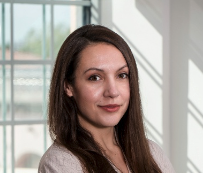
Ashley Smith and the Random Occurrence

Some have said this music is a bit bluesy pop folk, others have opined it is old soul with an indie feel. To all of the above, I say YES. This music is a bit of everything I love from jazz to blues, funk to folk. This music is me.
As far back as I can remember, sounds would mesmerize me. As a short haired girl freckled from head to toe, I would sit in the kitchen for hours just singing along with the constant hum of the refrigerator. As my red hair grew longer, so did my longing for art, for song.
Having been a part of great groups of musicians before, I have had the privilege to play in front of presidents, prime ministers, and foreign leaders both in the US and abroad. These were wonderful experiences and I am truly grateful to have had them.
But something was missing.
(Queue The Random Occurrence)

At the end of 2016, a chance encounter reunited me with a couple of longtime friends and musicians John Soler & David Diaz. They too have been in other bands and were working on their own unique & refreshing sound.
Immediately, I knew we had something special.
Something refreshing. Something real. Nick Ewing joined us shortly thereafter to provide a beautiful dynamic of ideas and talent with his violin and bow.
My hope is that, through this music, you feel me come alive. Come, share the pieces of my soul l leave scattered in song. Share a piece of me.

Tone I.E.

I like to write songs about mfs who break my heart so I’m like Taylor Swift except I’m Black and Better. Set the (Tone). Be the Example (I.E)

Tha Banned

Tha Banned is a jazz band consisting of Alejandro “Chach” Coronado (Trumpet), Malachi Elmore-Davis (Trombone), Kingsleyiii (Bass), Jeremiah “Yogi” Warren (Drums), Lincee St. Amand (Vocals) and Johnny Champagne (Keyboard). As a collective of Tampa based musicians and songwriters that started as a jam band in an auto shop, they are committed to spreading the spirit of live music and community.

Wülfgang Amadeus

Wülfgang Amadeus is a band that hails from Tampa comprised of poets. They blend music and spoken word to create an intense brew. As they self-describe:
“A Poet and Drummer meet at a bar and Wülfgang Amadeus is born! Now united, the Wülfgang is finally ready to shred their bohemian rhapsody across the ages with their timeless lyricism, classic riffs, inspiring Melodie’s, dynamic sound and talents that span multiple genres of performance art.”

Mountain Holler

Mountain Holler is the cavernous alternative-folk project of Seattle, WA based musician Mark Etherington. The music of Mountain Holler is a meditation on nature, the shadowed side of the human experience and the dream-like music born from explorations through his own mind. There is a very heavy influence from Tolkien lore, Led Zeppelin and Eastern spiritualism. Mountain Holler’s live show consists of multiple acoustic guitars in unusual alternate tunings, electronic drones and powerful vocals that provide the listener a sweet invitation to join in on one human’s experience of this world and our shared connection to nature.

Etherington moved from St. Petersburg, FL to Seattle, WA in 2021 after spending over half his life cutting his teeth in the Tampa Bay area music scene. Still watering his deep Florida musical roots by returning multiple times a year to perform , a Mountain Holler show is not one to miss. The Tampa Bay Times says of Mountain Holler ,” Refreshing and unpretentious, his music is spacious and etheral, conjuring visions of wide-open spaces, actualized through open tunings and a sea of reverb.” (Aaron Lepley). The Stranger writes that Etherington “murmurs, moans, belts, and croons ethereal yet powerfully-charged melodies that sound as if they were hewn from some rocky outcropping before their journey to the heavens.” (Leilani Polk)

He has since been steadily releasing new music to his bandcamp and self released his two newest singles ‘Trying to Connect’ and ‘Rolling Thunder’ on all major platforms in early 2024.

Nelson Mariscal

Born in Brazil from Bolivian descent, Nelson grew up in Tampa and began musical performance at the age of seven. Starting with piano, drums, trombone and tuba in middle school, he finally ventured into the world of guitar at 13.  After a year in training, Nelson auditioned and was immediately accepted to Blake High School of the Arts.  There, he entered classical guitar instruction with esteemed educator John Michael Parris.  In 2004, Nelson won the National Foundation for Advancement in the Arts’ Merit Recognition Award.  He graduated to study classical guitar at Florida State University’s College of Music under Professor Bruce Holzman.  While at FSU, he began exploring jazz composition with Joel Johnson and Leo Welch.  In 2005, Nelson attended New York University’s Guitar Intensive Program to further explore jazz theory.  He began teaching private lessons during his senior year and, in 2008, earned his BA Music degree.  Nelson came back to Tampa to continue teaching and has delighted venues around the region with his solo classical guitar, ceremonial ensembles, acoustic guitar duo/trios, and full electric bands. 

Tim Balajadia

Tim Balajadia was born and raised on Guam, USA. Tim has been writing, composing, and performing original music since 2001. His laid-back acoustic vibes with powerful alternative vocal tone fit him right into the progressive reggae scene. Tim holds firm to the essential values of Positivity, Peace, Equal Rights, Unity and Love. With people playing cover songs on Guam, Tim Balajadia left the tiny but mighty Pacific island inspired to create more conscious and impactful music.

RJ Howson

Fire branded in the Chicago blues circuit, roots rocker and bluesman RJ Howson picked up his skillful guitar chops & powerful vocals performing and sharing the stage with blues icons and fellow musicians at Buddy Guy’s Legends, Rosa’s Lounge, Kingston Mines, BLUES on Halstead and many other clubs in the Windy City and playing countless shows all over the Midwest.

Discord Theory

Somewhere between just enough and way too much, Discord Theory blends honest introspection, raw pop punk energy, and gritty post-hardcore intensity with breakdowns designed to move the room. Formed in sunny Tampa, FL in 2017, the band is led by Ecuadorian frontman Luis Giler’s commanding vocals and subversive songwriting, alongside Anthony Rogue’s groove-heavy bass, Sydney Reinfrank’s razor-sharp guitar, and Tyler Austin’s hard-hitting drums.

Geri X

Bulgarian-born Geri X is a composer, a musician and a singer hard to put a label on. Fans and critics spotted it from the moment she broke onto the Tampa Bay music scene: Geri is an artist with a singular sound you have not heard before.  What started with a classical training in piano, guitar and voice, evolving out of a broad and eclectic blend of influences, has become wonderfully her own.  

Have Gun, Will Travel

Much like the kids walking along the train tracks in the 1986 film Stand By Me (the initial inspiration for the band’s name), the members of Florida’s HAVE GUN, WILL TRAVEL set out on a life-defining journey of growth and discovery. Principle songwriter and singer-guitarist Matt Burke enthusiastically leads fellow bandmates; brother and bassist Daniel Burke, guitarist Scott Anderson, keyboardist Edward Stork and drummer Sam Farmer through a catalog of songs that run the gamut from foot-stomping front-porch spirituals to strum-punk rave-ups, hill-country historicals and indie-rock anthems. With six full-length studio albums under their belts, the “Silver Sounds” ep was released May 23, 2022 on silver 10” vinyl and the companion “Voyager Golden” ep on gold 10” vinyl released Dec 5, 2025, so HGWT show no signs of slowing down. In December 2022, the band’s hometown of Bradenton, FL awarded Matt Burke and Have Gun, Will Travel the key to the City of Bradenton for their contributions to the arts in their community.